
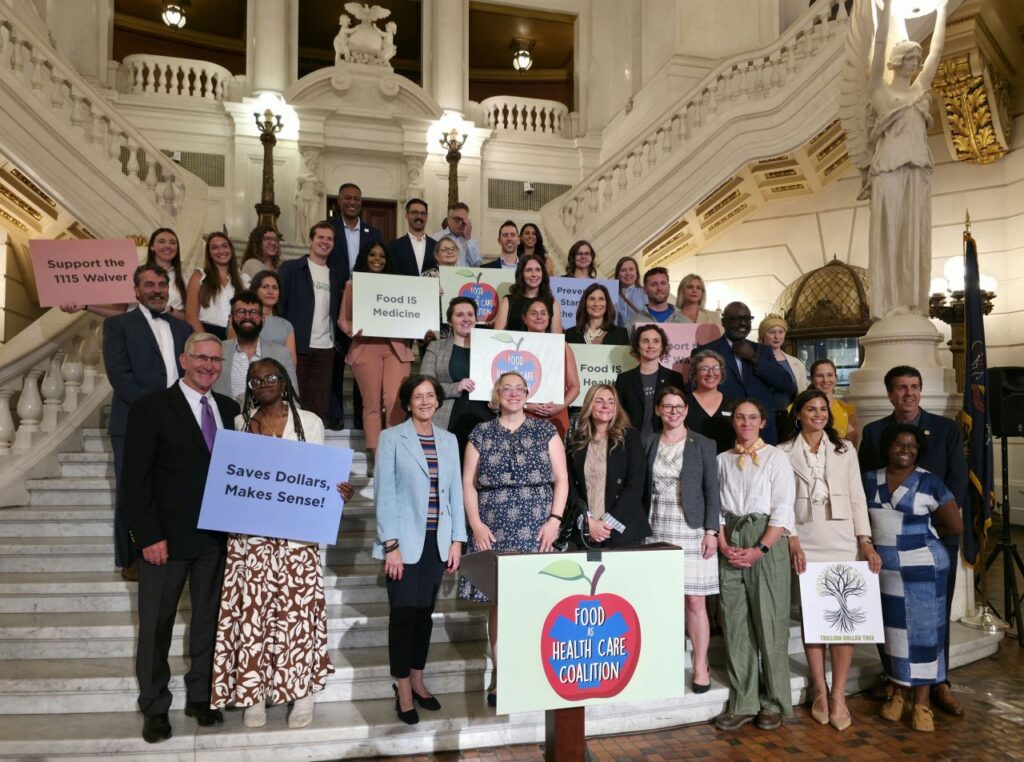
What if doctors could prescribe fresh fruits and vegetables instead of another medication? Across Pennsylvania, healthcare providers, farmers, nonprofit organizations, insurers and policymakers are working together to make ideas like produce prescriptions and medically tailored meals a reality. Last month, many of those partners joined together with The Food Trust at the State Capitol to demonstrate why nutritious food belongs in healthcare – and why the Food Is Medicine movement is gaining momentum across the commonwealth.
The Food Trust is proudly serving as co-chairs of the growing Food as Healthcare Coalition (FAHHC), and serves in this leadership role alongside Allegheny Health Network (AHN). Since its launch in January 2025, with support from The Heinz Endowments, the coalition has grown into a statewide alliance of more than 45 organizations and over 100 participants committed to advancing nutrition as an essential part of healthcare.
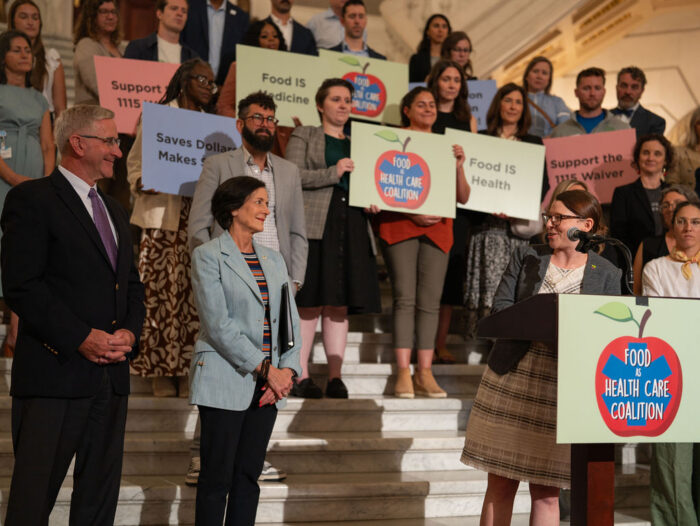
This coalition brings together healthcare systems, community-based organizations, food banks, farmers, insurance companies, researchers and policymakers to support nutrition and food security access as healthcare for vulnerable Pennsylvanians. Through collaboration, advocacy, and shared learning, members are working to build policies and programs that ensure Pennsylvanians have equitable access to nutritious food and the support they need to live healthier lives.
On June 24, FAHHC members from across Pennsylvania gathered at the State Capitol in Harrisburg with a shared message: food is essential to healthcare. Hosted by Human Services Secretary Arkoosh and Agriculture Secretary Redding, the press event brought together healthcare providers, farmers, community organizations, policymakers, and advocates to highlight how improving access to nutritious food can improve health outcomes while reducing healthcare costs.
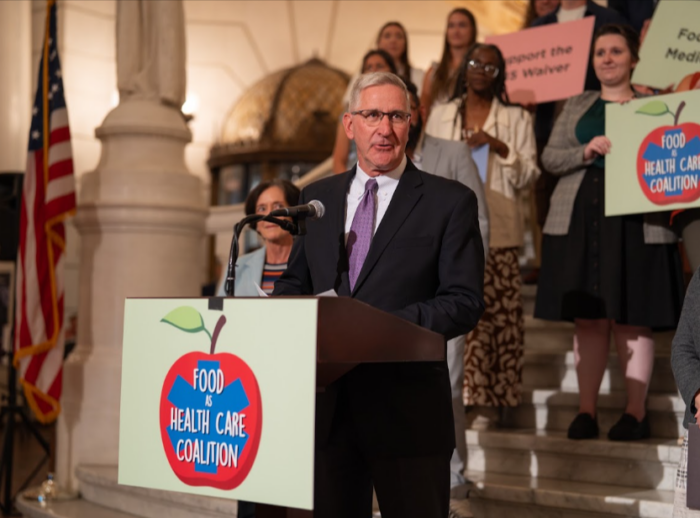
Food as Healthcare comes to the Capitol
The June 24 event demonstrated the momentum behind Food as Healthcare in Pennsylvania. Coalition members were joined by state legislators Reps. Natalie Mihalek, Emily Kinkead and Joe Ciresi, each of whom spoke about the importance of integrating nutrition into healthcare.
Rep. Kinkead reflected on participating in the “SNAP Challenge,” which asks participants to live on the average SNAP benefit – about $6 per day. Although she completed the challenge, she became sick and said the experience underscored how difficult it is to maintain a healthy diet on such a limited budget. She emphasized that Food Is Medicine programs can help bridge that gap for people facing food insecurity. Rep. Ciresi also shared his own health journey, highlighting the improvements he experienced after changing his diet.

Work in Action
Julia Koprak, Director of Incentives, Healthcare and Policy at The Food Trust, noted that diet is the number one driver of preventable death in the United States and shared a bit about what Food is Medicine looks like in action: “A mother with Type 2 diabetes receives a produce prescription, takes that to the farmers market to shop for fresh fruits and vegetables that her family could never normally afford. She is then able to reduce her A1c level and avoid costly diabetes-related emergency room visits”. Examples like this illustrate how Food Is Medicine interventions improve health while reducing healthcare costs.
The Impact Goes Further
The event also highlighted the voices of Pennsylvania farmers who witness the impact of Food is Medicine firsthand. Jane Kaminski, co-owner of John Paul’s Farm in Indiana County and a longtime Food Bucks and Food Bucks Rx partner, shared the story of one of her regular customers: “One of my regulars, whom I’ll call Christina, visits my stand with her young daughter–the two of them browse the produce together thinking about what they want to eat while assessing their budget. Christina is not only purchasing fresh produce for herself, but helping her daughter build lifelong healthy food choices. I love when Christina’s daughter gets excited about picking out a new vegetable to try, and I get to share cooking tips with her mom so they can enjoy it together”. Jane went on to share that Food Bucks Rx, a nutrition incentive program operated by The Food Trust and participating healthcare providers, contributes to her bottom line. As a vegetable farmer in Pennsylvania in a time when it is becoming increasingly more difficult to own and operate farms in Pennsylvania, Food Bucks Rx puts more money directly into the pockets of farmers like Jane.
Looking Ahead
The June press event reflected the growing momentum behind Food as Healthcare in Pennsylvania. As the coalition continues to expand, its members remain committed to advancing policies and partnerships that recognize nutritious food as an essential component of healthcare. And there is still much work ahead: Pennsylvania has received approval for a Medicaid 1115 waiver to pilot additional nutrition supports across the Commonwealth, but this pilot has not yet been funded through the budget process.
By bringing together healthcare providers, farmers, policymakers and community organizations, the Pennsylvania Food as Healthcare Coalition is helping build a healthcare system where nutritious food is recognized as an essential part of treatment – not an afterthought. As momentum continues to grow, coalition members will keep working to ensure every Pennsylvanian has access to the healthy food they need to thrive.